

FrankM
Member

EVERY store in Canada should be required to accept cash
– no exceptions
Hello everyone,
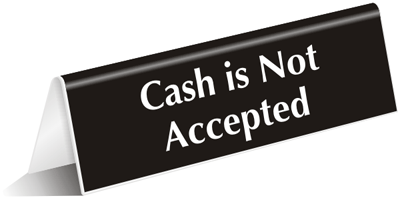
With more and more places (coffee shops, food trucks, even some big chains) going "card only" or "cashless preferred," I think it's time we push back harder. Cash isn't just some old-fashioned thing – it's essential for a fair, inclusive, and resilient society. Here's why I believe all stores should have to accept legal tender (cash) as a payment option, and why going fully cashless is a bad move for everyone.
I'm not saying get rid of cards/contactless – they're convenient for many. But choice is key. No store should be allowed to exclude cash entirely, especially for essentials like food or groceries. We need legislation (like ideas inspired by Payment Choice Act discussions) to mandate cash acceptance (with reasonable exceptions maybe for tiny online-only sellers).
What do you think? Have you been turned away for trying to pay cash lately in Kitchener/Waterloo or elsewhere in Ontario? Seen more "card only" signs popping up? Does this bug anyone else, or am I overreacting?
Let's discuss – and maybe share this to get more eyes on it. We shouldn't let convenience for some become exclusion for others.
Thoughts?
– no exceptions
Hello everyone,
With more and more places (coffee shops, food trucks, even some big chains) going "card only" or "cashless preferred," I think it's time we push back harder. Cash isn't just some old-fashioned thing – it's essential for a fair, inclusive, and resilient society. Here's why I believe all stores should have to accept legal tender (cash) as a payment option, and why going fully cashless is a bad move for everyone.
- It excludes people who can't or won't use digital payments
Not everyone has a bank account, credit/debit card, or smartphone. In Canada, there are still unbanked or underbanked folks (immigrants, low-income, elderly, homeless, etc.). Cash is universal – no fees, no credit check, no app required. If a store refuses cash, they're basically saying "we don't serve you." That's discrimination by another name. Tourists, kids with allowance money, or anyone who just got tipped in cash also get shut out. - Privacy matters – cash is the last truly anonymous option
Every card tap or e-transfer leaves a digital trail. Companies (and potentially governments) track what you buy, where, and when. Cash lets you buy a birthday gift, donate to a cause, or grab a snack without your entire purchase history being profiled and sold. In a world of data breaches and surveillance, that's huge. - Tech fails – cash doesn't
Power outage? Internet down? Card machine glitch? Happens more than you think (especially in storms or rural areas). Cash works every time. During emergencies, blackouts, or even just a busy day when the POS system crashes, cash keeps the economy moving. Relying 100% on digital is risky for stores and customers alike. - No hidden fees for businesses or customers
Credit/debit fees (1.5–3%+) get passed on to all of us in higher prices. Cash has zero transaction fees for merchants. Small businesses especially feel the pinch – why force them to pay big banks just to sell a coffee? Accepting cash can actually help keep prices lower. - It's still legal tender – but businesses can refuse it?
In Canada, there's no federal law forcing private businesses to accept cash (unlike some U.S. cities/states that have banned cashless policies). But that doesn't make it right. Cash is issued by the Bank of Canada as legal tender for a reason. If we let stores cherry-pick payment methods, we're slowly eroding access to basic goods and services.
I'm not saying get rid of cards/contactless – they're convenient for many. But choice is key. No store should be allowed to exclude cash entirely, especially for essentials like food or groceries. We need legislation (like ideas inspired by Payment Choice Act discussions) to mandate cash acceptance (with reasonable exceptions maybe for tiny online-only sellers).
What do you think? Have you been turned away for trying to pay cash lately in Kitchener/Waterloo or elsewhere in Ontario? Seen more "card only" signs popping up? Does this bug anyone else, or am I overreacting?
Let's discuss – and maybe share this to get more eyes on it. We shouldn't let convenience for some become exclusion for others.
Thoughts?
Last edited by a moderator:


